Tuesday, 5 March 2013

Elements of Game Design, Part 4: Environment


As the years go by these become for more visually stunning and become more interactive and explorative than ever before. A level designer needs to give instruction to guarantee flowing gameplay, but not so much that it is obvious to the play. There still needs to be a challenge and a sense of discovery once you uncover the next task or stage of the game.
So many aspects of an environment can influence the atmosphere. The biggest being lighting and weather. How the light plays with object surfaces and textures can really highlight and intensify the desired atmosphere. Dark and gloomy lighting, with stormy weather can obviously create a very sinister feel, whereas a breaking dawn with a beautiful sunrise, casting an autumn coloured glow, would to create a feeling of hope and adventure, a new beginning. Scenery and surrounding also influence the aesthetics of a game environment. Built up cities, or open fields support many different ways of gameplay. Open fields and wide spacing, leave players to roam, giving a wide scope of exploration. A city environment could be controlled, cities are mapped out in real life to create flow, allowing people to reach certain destinations, this is true of video games also. Even though a huge city would leave room for exploration, but many games that use this type of layout are usually quite linear, you go in a certain direction to reach a certain goal.

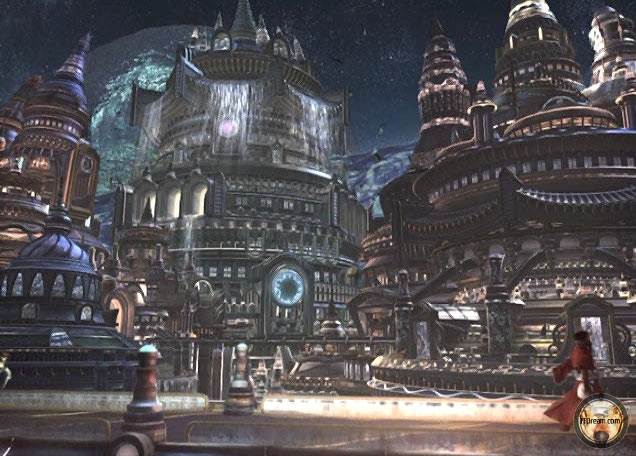
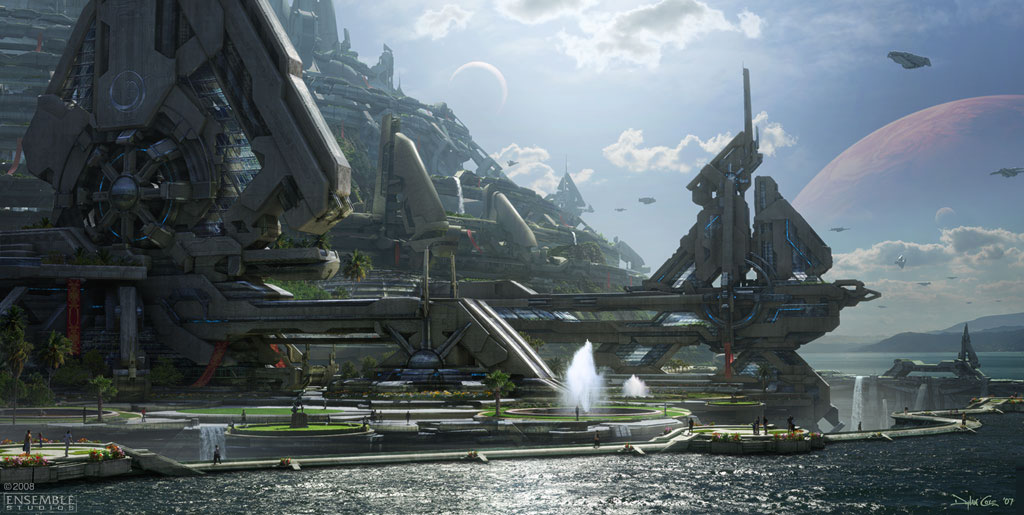
Depending on the game style/genre, the levels of realism and stylisation have to be measured carefully. As well as other things, the environment of a game plays a key role in making a player believe the world they are in. With greater technology as the years progress, the level of realism to the visual graphics of a game has reached high levels, with recent releases, it becomes more and more difficult to determine what is real and what is game graphics. Such as the very recent release Tomb Rader, I personally was stunned by the graphics and the quality of realism that was obviously present. In terms of whether an environment is physically possible to recreate in our world, the level and practical realism is a rough area. For me, if It looks right and doesn’t bend any laws of physics, then it wouldn’t drag me out of my gameplay. But I love highly stylised visuals just as much as I love revolutionary, highly realistic looking graphics. The environments in games such as final fantasy 10 and Halo are visually stunning and encapsulating, and have just as bigger impact as realistic environments, but it is entirely dependent on the genre of the game.   


Personally one of the most amazingly breath-taking environment I’ve seen of recent belong to ‘That Game Company’ title Journey. Its style is highly simplistic but simple beautiful. The environments rage from huge desert, to an underwater world, to a winter wonderland. They are all environments, unlike any others. They were so well executed that you could feel the cold when battle through the snow storm, my throat felt dry when wondering through the dessert. Everything was so complimentary even though you went from sand to snow, hot to cold, everything still flowed. 


Environments in games give it identity and style. So much can be said through just how a building looks, or how an environments flows from one extreme to another. Without cleverly executed and though out environments, games would not have that power that they have on the human mind and allowing us to explore the form of escapism it gives us. 

Elements of Game Design, Part 3: Character


A set of interesting and well-designed character are what drive a game and its story. Characters help us, the viewer, form a bond with what’s happen around us, giving us a first person insight into the world we are driven to explore. They help us interact and be a part of the story. In books, TV and film this is also apparent. Seeing a characters emotion and reaction to situations, we are able to see for ourselves, we see into the characters mind and empathise with this person in front of us, bearing our soul. In games you do anything to stop your character from dying or being injured, there is an embedded fear of being attacked or anything bad happening to a character. It makes us cautious, we change how we are, our mood, our body language, anything and everything to do whatever it takes to make sure your character succeeds by any means necessary. It's this bond that immerses our emotions into a game, as the link below shows, all be it in very extreme ways:  


From personal experience of characters in games, I grew a close bond to a certain game. To say these characters felt like family is highly cliché, but there is no other way to describe it. I saw these character from a young age and they have always been in my memory. I’m talking about final fantasy 7………again, but this shows what I mean by how much this game means to me and how much it has impacted my outlook on life. 


To me every aspect of the game, makes it the perfect game, but a big part is the characters. Even though technology wasn't its best at the time, to the point where the characters couldn't even speak, but this didn't stop characters from developing personalities. Everybody is seen and ‘heard’ even though they don’t speak. This is where script comes in, and how it is more important that the script is right. With modern games, the script is still important but it’s the voice acting that makes the script shine. Back in the days of final fantasy 7, the player had to gauge a characters emotion from written words alone. Script in terms of punctuation was crucial. Sure it could make for lengthy conversation and cut scenes having to read what a character is saying, but it still managed to grip you and keep on hanging onto every last word. 


In a game like Metal Gear Solid 4, acting and body language played huge parts in the cut scenes. Again, as the above video shows, the cut scenes are lengthy in this game, and I did find myself fading in and out of conversation, but it was the acting and body language that distracted me. The emotion in characters faces and the pain in there body when they twist and contort, makes for a realistic, believable scenario. 

To me, a story that shows in depth character development and a heavy focus on an interestingly intricate story line, is key to a memorable experience. Whether it be film, TV, books or games, a story can be gripping when all the ingredients are well balanced and of good quality. Characters help us become part of the story. We look for qualities in the characters that we can also see in ourselves. This gives us connections, makes us feel a part of what we’re viewing and this is so true in computer games, more so than any other form of media.

Elements of Game Design, part 2: Art Direction for Games


Art direction in games is a crucial part of the development process for a game. The art direction tells us, and the people working on it how to make things look and feel. This makes or breaks how a player reacts and immerses themselves within a game. Without it a game would have little or no identity. The art director is responsible for pretty much everything a game has to offer visually. They are responsible for the overall look of a game, this relates to everything from textures to cracks in the walls, they decide how things should look in order to keep in line with the theme and tone that has been decided upon. http://my.safaribooksonline.com/159200430X/ch11lev1sec2?portal=oreilly

This role requires a highly creative mind and a visionary type of character. Someone who is always thinking ahead and constantly thinking of the work ahead of them. Ways to improve and to better the quality of work they have to produce as a team. To make an exceptional art director, you don’t only need creative flare; something that is just as important is a good team leader. As is stated in this link http://www.gamasutra.com/view/feature/3115/common_methodologies_for_lead_.php :

“The best teams I've worked with had an art director and lead artist who worked closely together and respected each other's roles. They communicated openly. They agreed upon the visual direction of the product and discussed their respective responsibilities that were required to carry out the execution of the design. Not surprisingly, they were relatively stress-free teams. With the definitions out of the way, we can look at the methodologies and stages of production the lead may encounter.”

In order for a team to create a highly detailed, flowing game, that has all the qualities the art director is looking for, they need to have close communication with everyone on the team. Collaboration is another crucial part of art development, many ideas working well together is usually a highly successful technique if done properly. Collaboration cannot work without good communication and understanding of one another. A team leader (art director) needs to be able to collect ideas from different areas and work them together. This calls for decision making, every decision counts to the end result in some way and it’s up to the art director to make these tough decisions. 

Game art direction is one daunting role to be a part of, let alone be the leader of. In comparison to an art director in film, the roles are quite similar. According to the step by step guide on wiki how, http://www.wikihow.com/Become-an-Art-Director-in-Film an art director has to design a set, right down to the smallest detail. This is similar to an art director for a games company, designing an environment then deciding what to use and what not to use. However from reading the above webpage, it seems to be much more of a solo career in the films industry then in games. There seems to be little collaboration or signs of working with a team. Also, an art director has to choose the feel and mood, and set the vibe for the entire game through its visuals. This stretches beyond the environments, and right to characters and vehicles as well.


From this comparison, I understand just how much an art director has to take on when helping to create a game. As well as having to lead a team, it adds further social pressure compared to a more solitude design process that an art director for a film would have to endure. Game production has such a wide scope and needs a lot of peoples help. Communication in order to make the story flow from its different areas of creation, seems crucial to making an iconic game. 

Elements of Design, Part 1: From Pong to next Generation


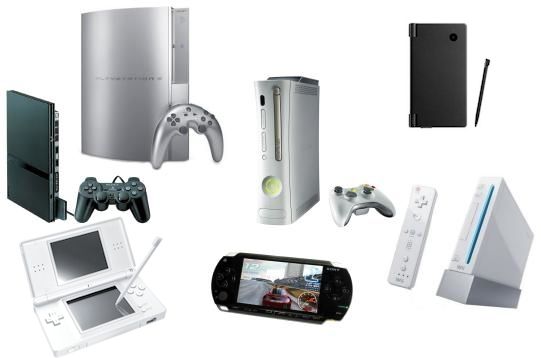
As technology and people’s exposure to so much more of the world becomes more imminent, the next generation of games have to keep up and follow along with the rest of the media. With the arrival of next generation hardware, we were given highly realistic and believable surroundings. This undoubtedly sparked our imagination, but was there a specific reason for this? Games in terms of plot don’t hugely differ from own to another. There are goodies and badies, you against another, in order to succeed you must be the best at what ever task it is that is in your way. 


Gameplay allows us to do things we could not normally do. It is escapism, and all areas of a game must work together to make it successful. Industry wants to sell and starting with Pong, the selling point was it was new and technological for its time. Ping pong could now be played on screen and you had to beat your opponent in order to succeed. The look was minimal purely due to the available technology at this time. Comparing computer games with traditional board games is often done, but for what reason. Board games are constrained and rule bound, there is a certain way to play and a certain way to win. With game play or ‘play’, especially with modern hardware, there are so many different ways to play, the world is yours to explore and in your own way and on your own terms. 


Next generation games allow play instead of just taking part in a game. You are the main attraction in whatever world you desire to be a part of. Ranging from different types of playing style to the interactivity that different platforms have to offer. The task of designing is a team effort resulting in pages and pages of story idea’s, character, genre, environment style, play type etc.   http://www.gamasutra.com/view/feature/2156/game_design_theory__practice_.php  

These however, sometimes back fire, (hyperlink above explains) overload of ideas and cramming the entire game is too constrained, (almost like the rules of a board game) Designing a game, especially in the early stages is all about concept, the main idea and theme, which from that further development in production will shape the story line and other key aspects of the game. The genre inspires all visual and indeed plot aspects of the game, and would require research into past games that are the same genre. No matter how much a game claims to be new and innovative there will always be some past game,that was used for research purposes. It’s unavoidable, you need to know what your competitors are promising and see what you can do that’s different, and that’s all the games industry is, ‘One-up’ manship. From the dawn of computer games like Pong, to the present, there has always been one company, one game genre at some point that was above the rest. Games will continue to try and get better until nothing more can be done. 

Impossible right? Where the future is heading for games is very uncertain, I’m sure when people first got to experience Pong they never thought the virtual and physical would eventually be one:  https://www.youtube.com/watch?v=9VKptjKW83Q  

Wednesday, 16 January 2013

Game Review - No More Heroes


Watching a friend play, I thought to myself, “hmmm this is actually something I could get into.” She failed miserably and handed me the Wii remote, yes you heard right, ‘Wii’ but bear with me on this, hard-core gamers please don’t start pelting me with Xbox controllers. I asked for the controls and instantly I had it, button mashing to my hearts content. Let the character have all the flare whilst I continuously press ‘A’ on the controller. Then that glorious moment, I defeated the boss and felt great pride in doing so. I had to continue, but this wasn’t my game and I was hooked and in awe of what I’d just accomplished. I got the green light and was able to borrow the game.


I inserted the disk and an instant rush of excitement as a montage of action, violence, vulgar language and revving engines forcing me to turn down the volume. It was a game like no other I’d experienced. The comic book style and colourful cast of characters, the opening video catapults you into the first level and very quickly the first boss. Assassin number 10 in the UAA ranking. As your character, Travis Touchdown reveals his weapon of choice, which appears to be a light saber but is identified as a ‘Beam Katana.’ Kind of looks like a florescent light with a handle, but can be upgraded to a light saber that looks like a samurai sword…awesome. You and the control are one, luckily you don’t have to swing the remote around like an ape, simple button mashing releases an insane near unrealistic combo of slashes and jumps. The over the top back and fourths between you and these assassins should be cringe worthy to hear, but I’m afraid the hype got to me, loud noises and bright colours just threw off any sanity. I was a giddy child, full of hope for this new addition to my life.


As the game progressed, I became more and more involved, discovering side tasks not impending on the main game. I’m the type of person that enjoys a story, so anything in a game that is unrelated to the main story doesn’t receive any attention. Being more of a viewer of someone playing, rather than playing myself, I enjoy the story and the adventurous journey I’m about to be taken on, but I became near OCD when completing all the non-compulsory tasks of the game. I had to get them all, I had to complete everything, and I god damn enjoyed every second of it. This game exceeds any expectation you’d have for a Nintendo Wii game, this is far beyond ‘My Sims Kingdom’ and ‘Wii sports’, this is an epic thriller with highly explosive feel. It was a 16+ rated game, so it did have some ‘naughty material, from bad language to sexual innuendo and violence, even to saving the game by ‘relieving’ yourself in the bathroom, but it’s all childish harmless fun, these are comic book characters, who have permission to be as outrageous as they were created to be.


The whole thing is one giant pantomime. It’s a wacky, purposely over the top, action packed game, with a unique look and concept, a script and story that doesn’t take itself too seriously. This game in my opinion, is one big theatrical laugh that’s cheesy, funny, original and exciting to first time players. For a Nintendo Wii game to be that awesome and to pretty much slip under the radar is a mystery to me. I was praying for a sequel and when I finally got my hands on it a couple of years later I was seriously disappointed and only got a quarter of the way through. It goes to show, sometimes things just work and you can’t put your finger on it and ‘NO MORE HEROES’ is exactly that. I would seriously recommend giving it a try, just defeat the first boss and I am pretty sure, you won’t want to put that nun-chuck down anytime soon. 

Tuesday, 18 December 2012

Writing about Games, Previews, reviews, commentary and lies

Alongside the video games industry there are games reviews and games journalists. These people tell us what is right and wrong in the gaming world, and what we should spend our hard earned cash on for a bit of entertainment. Not being a very hard-core gamer myself I really don’t know much if anything about games journalism and reviews. After a tiny amount of research I’ve learnt a few basics. A lot of games reviews come with a score, usually a number out of 10 or even a percentage. But as we progress many other forms of game reviews are cropping up. One that I particularly pay attention to, and doing this blog I’ve only just realised I do, are lets play’s on YouTube. Whereby a normal everyday game lover films him or herself playing a game and commenting as they go through. A lot of these are for entertainment purposes but some do voice their opinions on many aspects of a game. I’m pretty sure that game companies and reviewers work incognito to help each other, the whole thing is clinical, controlled and edited as they see fit. THIS IS NOT GAMING and has led to the public creating their own reviewing and advertising network. Being a spectator rather than a player myself it takes a lot more for me to consider actually purchasing a game and play it hence why gaming reviews do nothing for me. I don’t watch someone play to find a number, a score out of 10, I watch for the experience. The NGJ are redundant in many ways to the public they claim to serve, they are there purely as a business outlet, an extension of the games industry. As a race we have become lazy in this modern world, we will always pit for the easy option and pretty much want everything handed to us on a plate. We choose not to think for ourselves when it comes to retail. When buying a product online, from websites such as Ebay, before purchasing, you’ll read the review before purchasing. Everywhere we go we look to others to show us the way and what they think and this fuels our decision almost making it for us if we’re really feeling lazy and zombified at the time. Gaming and reviews are in a world of their own. Purely working for themselves within a system that actually alienates the gaming public. Money circulates between them Underhand payments from games companies to games reviewers such as IGN, to write about their game in a positive light to boost sales. What they make and the press surrounding them is something entirely different to what we as gamers actually experience when exploring these worlds they have created. Something that springs to mind as an example, being a game watcher I’m quite the fan of the YouTube channel PewDiePie.  http://www.youtube.com/user/PewDiePie?feature=watch
For those who don’t know, he makes videos called ‘let’s play’ where he plays a game and films himself playing it in episodes for the viewer to watch as a series. He’s popular for his funny comments and has a huge fan base spread right across the globe. I hadn’t been watching him for long when I came across his series for the game The Walking Dead which funnily enough was a highly acclaimed game, winning countless awards including 2012 Game of the year.
http://en.wikipedia.org/wiki/The_Walking_Dead_(2012_video_game) I watched the series not expecting much, if anything the visual style of the game put me off a little, but being based on a comic book series I can see why they went for this particular style.


I became hooked, drawn in and the clever decision making that affects the characters and also change the flow of the story. I was up watching it until the ridiculous hours of the morning. Like a book I couldn’t put down I had to find out what happened next. The story takes a turn for the worst and as the story drew to a close, PewDiePie himself was becoming incredibly emotionally involved in the characters and story line. So much so that the ending scene reduced him to tears and so was I. I had never cried at watching a game like that and it amazed me. Writing this blog I realised, if I were to read a review of this game and hear it won awards, I may have batted an eye lid but never would’ve attempted to experience it in any way. Watching the story unfold before your eyes, hearing the comments and the thought process of the player, you couldn’t help but become emotionally involved. If I had to read a journalist interpretation on the game I seriously doubt they would be able to hook and completely immerse all my emotions into the game and story. What I’m saying is, the idea of a review where none of the gaming is being viewed by the public and writing is all they have to go by. This is then supposed to help us decide whether we would enjoy playing a game, the whole thing just doesn’t work. A game is a world, it evokes and awakens all your senses, apart from the obvious taste and smell. The only way writing would evoke these feelings, would be if it were a novel. That obviously isn’t the intention of a review, deadlines and word counts are what matter. In my opinion I would never judge a game by what review it got. No matter who gave it or where it was published. I have to be shown it or at least be told face to face with someone who has experienced it first-hand. This is a true test and a closest insight to a game you can get, without actually playing it. Depending on your preference in terms of your relationship with games, for me there’s no better review then seeing it with your own eyes.

Thursday, 6 December 2012

My Personal Gaming History

My personal gaming history is probably not as colourful as most of the people on my course. My gaming history mainly consists of watching people play. I’ve mentioned this in previous posts, but I’m going to go into more detail, giving ages and what was going on round about that time in the gaming world.
My brother being my main link to gaming has hindered my knowledge of all the games out there. For example, he wasn’t a Legend of Zelda fan, and yet everybody claims it’s one of, if not, the best game of all time, and yet because of my brothers taste I never knew the joys of Zelda until recently and therefor I was led to be believe otherwise to who owns the best game ever title.
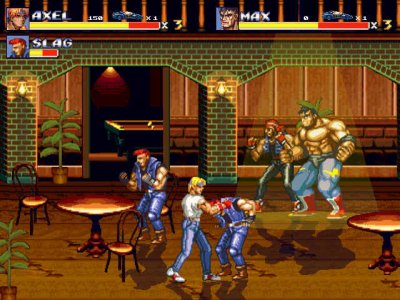
My first gaming experience ever, would probably be, again watching my brother play on the Sega mega drive. A games console that I have grown up knowing and playing games such as Sonic 2, Streets of rage 1 and 2, Micro Machines and my mother’s personal favourite, Columns. My first exposure to games would’ve been this, even though I can’t quite remember. But I’ve been told countless times of the stories where I pulled my mother’s hair as my brother was thrashing her on Micro Machines. Did anything to help my brother succeed, he must have trained me.


My first memory of a game would probably be Resident Evil. No prizes for guessing why I remember it. Obviously a terrifying game for anyone let alone a 6 or 7 year old. Not too sure how young I was when I was first ever exposed to it but I know my brother was 12 when he first played it. Another game I can remember from an early age was Silent Hill 2, again, for the same reasons for Resident Evil. I’ll always remember the scene that frightened me the most. It’s the scene where you come across your first enemy. I literally ran out of the room I was that terrified. O_O However, another thing I remember thinking about that game in particular, was that the graphics in the cut scenes looked incredibly realistic for its time. Especially the opening scene that introduces the main character, James.

Another game from my childhood and quite possibly the most important game in my life was of course, Final Fantasy VII. I’m not going to go into detail; I’ve done it in other posts and I’m getting sick of explaining myself, but I think this game is the blue print of my ideal game. An incredibly deep and engaging story line, with a wonderful world filled with so much beauty and breath taking atmosphere, teamed with a group of lovable characters. The only thing that was missing were great graphics and talented voice acting. There were rumours of a remake, but the rumours were soon put to bed. According to Wikipedia, http://en.wikipedia.org/wiki/Final_Fantasy_VII the rumour was sparked after the release of a video featuring the opening scene from the original game but using PS3 graphics. It was soon stated that at that time, there were far too many other projects that were happening and that there would simply be no time to start a remake project of such a long game any time soon. I would’ve loved to have seen this, but I can’t help but think it could potentially ruin the game, but I guess we’ll never know.
Let’s skip ahead to when I first started properly playing games. I dabbled here and there with a few titles. One I particularly loved was Guitar Hero. I love rock music and I thought the idea of appearing to play a guitar in front of a crowd was such an awesome idea. I played a few of the Sims instalments, but I think it was when I got a Nintendo DS Lite one Christmas. I had a collection of games for it, Tomb Raider Legend, Scribblenaugt, Final Fantasy 3, Super Mario Bros, Legend of Zelda and the Phantom Hourglass, a couple Sims games, and even my old nemesis, Resident Evil 1, which was exactly the same as the original, and yet I conquered my fear and completed it, near enough, just had to kill the last boss. No health in sight though, so I took it as a victory for getting through the whole game and gave myself a pat on the back.
Next console I had was a Nintendo wii. As well as this I’d have a sneaky go on my brothers PS3 to play Devil May Cry 4. I completed that numerous times on all levels of difficulty. Probably one of my first proper gaming experiences.   
However, I discovered my first purchased game that I bought and got obsessed with. I did every single little bit of it. Usually I don’t bother with these and just do the main story but I got hooked and consumed. I don’t think this game was highly praised but I loved it. It’s called No More Heroes for the wii. It had such a unique look that I found really appealing. It had a comic book style, full of action and violence but it didn’t take itself seriously and did really well to keep it fun. I loved it, yet the sequel didn’t quite engross me as much. So it has been left uncompleted.


Ever since then I revisited a few games of my brothers, like Final fantasy 10, which I managed to complete and was quite proud of myself for doing so.     
Ever since that however. I haven’t really touched a game properly for a while. However I have begun to like watching ‘Lets Plays’ and ‘Walk Through’s’ on YouTube. It goes back to when I watched my brother on games and just enjoyed the story. I do think I prefer watching to playing, but there are some games in this world that you just have to play.
But it’s clear that computer games have been a big part of my life. They’ve influenced me since before I can remember, and I hope they continue to throughout my time on this course and in whatever career I find myself in at the end of it.