Saturday, 15 February 2014

Task 19: Elements of Game Technology, part 2: Sounds of Games

Sound is used in many different ways in games. Background music that plays throughout levels as well as the music in the cut scenes, tend to be the musical selling point of the game. It gives a game its signature sound which is an aspect that become recognisable, drawing people to the game. Music and sound that is used throughout the level, from the sounds of the footsteps of your character, to the sounds of distant enemies. Teaming this with background music to make an incredibly atmospheric level. However, games can also understand how the absence of music and sound can also create tension and an uneasy feel. In game sound effects also need to echo the same tone as the actual score. All sounds need to link together to make a game flow.

These are a couple of links to lists of music composers that worked some very well-known titles, that really highlighted the importance of a good music score.


Everyday I’m discovering soundtracks to games I’ve never played but love to listen to. I’m a big music fan and I listen to music pretty much every day. Game scores have this ability to completely remove you from this world and take you into theirs. As well as relaxing, a lot of game soundtracks send shivers down my spine, and the hair on my arms stand on end. The power of music shows no bounds especially when used well in games.

In terms of my first memory of getting that goose bump feeling from hearing music was from the game Final Fantasy 7. I’ve mentioned this game in this blog before, purely because it was part of a huge chunk of my life and I almost feel it’s shaped my outlook on life. As well as the intricate story teamed with this soundtrack, it’s left a lasting memory that will never fade from my mind.


The above link is the original full FF7 soundtrack, as soon as the  music started playing the biggest smile on my face emerged. Nobuo Uematsu is responsible for the music of the whole final fantasy game series. He’s not as involved in the later, most recent releases and I can see why. I personally have become less of a fan as the series continues. Seeing as Nobuo’s input is becoming less and less, my love of the game follows the same pattern.  His staple sounds are always a loving memory to the fans of the earlier series, including myself. I stumbled upon these videos from the ‘Tour de Japon’ where by a full orchestral band play the most memorable tracks from the game, below is the video to the main theme. (just to let you know, listening to this particular piece of music makes me weep like a baby)


Also classic Sega mega drive games are part of my earliest memories of games. These obviously come with instantly recognisable soundtracks, thanks to their simplicity. Below is just a quick list of some lasting Sega Mega-drive soundtrack memories and just gaming, childhood memories in general. 

Sonic 2, Streets of rage 2, collumns, golden axe 1&2, General Chaos and many more.


My most recent discovery of excellent use of musical score in games are The Last of Us (surprise surprise) and a beautiful game called Journey.The Last of Us has a very unique sound. The music was composed by Gustavo Santaolalla and Argentinian musician. He specialised throughout his career with instrumental music. He created a whole album, making instrumental music with an instrument called Ronroco, which features in the soundtrack for The Last of Us. The music is quite sombre and muted, but within its simplicity, its simply beautiful melodies where what created that staple sound that rung true with the genre for this game. This is the same with the game Journey. This game was purely about visuals and the look and feel drove the story, as well as the epic orchestral music, teamed with the grand scenery that features within the game. 


Video games are becoming a credible media. Cinematic cut scenes with full music scores rivals film and television. However games have the extra ability of player interaction, this can fully engulf the viewer into the virtual world of the game for a more intense experience. 

Saturday, 4 January 2014

Elements of Game Technology: Part 1 – Game Engines

Game engines are where the game is brought to life. Stitching together all of the so far separate elements and making them one. Game engines are like the mixing bowl where by you throw in all your prepared ingredients to make something whole and complete. Game engines allow a game developer to enhance the creations further by adjusting lighting, placement of object and assets in contrast with each other and so much more.

The list of different game engines is endless. There is a huge number of free software for small time projects, such as indie game developers or people who just fancy having a go at game creation. There are programs that are used for commercial use that obviously produce a high quality finished project. My personal experiences of game engines only stretches as far as UDK (Unreal Editor) This is considered a freeware software. It is available to students studying game development courses and produces a professional finish. Another engine we use called Cryengine, that produces a high quality result. CryEngine 1 was used to create the whole of Ubisoft’s, Far Cry series. Unreal Engine 4, which is a newer game engine from Unreal, the company behind UDK, was also used for games such as, Mass effect, Gears of War, Bioshock Infinite and Dishonoured. This website shows a list of the considered top 14 game engines  http://www.develop-online.net/news/the-top-14-game-engines-the-list-in-full/0114330


The list also considers 2D games engines that are used to create 2D side scroller games. Obviously for 2D and 3D games, they require different elements. Considering light had very little impact on a 2D object I find the biggest main difference between the 2 modes of engine would be lighting. 3D objects occupy space, an environment, all things that the human eye needs light to see. Also as lighting can help the human eye depict different surface textures and also can create mood and feel within a game. 2D games have to consider strong imagery to get across what they’re trying to communicate. I feel that this would require some clever trickery. With 2D there is obviously less to work with which means using resources more intricately. 3D has a higher technical demand as is has to create space and extreme levels of detail.

A vast pool of easy access game engines, make any budding you g game developers chances to try out their ideas a reality. The engine GameMaker, has been around for a while creating small personal projects. However, small time production games that used this program have become highly popular. Games such as Hotline Miami, made by a small company called Cactus Games.  This link has a review on this particular game engine. http://moacube.com/blog/professional-developers-look-at-gamemaker/


The list of game engines is endless, allowing armatures to produce some high quality, professional looking work. Each and every one has different qualities to produce whatever type of game the creator desires.

Elements of game design – Part 8: Documentation

For this blog task I was asked to write up documentation for a Video game idea.

Game Specification

With this project I plan to create an epic adventure game, which resides in a vast land of origin and grandeur. A land where a small being would struggle to make a difference. I want to create a fully immersive world whereby the player becomes lost in this world of epic proportions. I plan for it to be available on all major platforms. (PS4, Xbox ONE, PC, Nintendo Wii and WiiU)

The player will be in control of the main character. Who has to travel the world in search of the truth about her past; the main protagonist is a female character. I feel that a game with a story, that unfolds along with play is such a highly praised feature in a game. To connect with the character the player must be, I feel following along on the adventure, learning as your character does, really creates an emotional bond between character and player. Making the character female, will attract a wider audience. It is common knowledge that Video games are seen mainly as a male interest. However, more and more females are picking up games controllers and getting involved. This is a growing market and I feel this project would sit perfectly well, within this growing phenomenon.

For the modelling of my assets and characters I shall be using 3ds Max and Zbrush. Then plan to import these into Unreal Editor UDK To model, light and animate the game itself. Below are individual specifications as to the main components.

Lead Character
A young female character who’s strong willed and prepared for anything her journey will throw at her. She has been on her own for as long as she can remember, raised by a distant relative after her parent mysteriously vanished. Below is a quick mood board of female protagonists to help gauge the look I’m aiming for.


The tri limit for my character (modelled in Zbrush and in 3dsMax) will be 10,000 tri’s. I will allow for 3 texture sheets, two 1024x1024 and one 512x512 targa file. (diffuse, normal and specular) The character will have full rigging for realistic animation when it comes to in game footage and cut scenes.

NPC
This character will be a side kick to my main character. I plan for it a to be a creature who’s species is native to the main characters homeland. This creature can help with in game puzzles and other tight spots. I want it to be a constant companion throughout the game, to help bring the player closer to the relationship between the 2 characters. Below is a mood board showing different ideas of inspiration.


The tri limit for this character will be 6000 tri’s. I think 2 texture sheets, one 1024x1024 and one 512x512 targa file. (diffuse, normal and specular) This should be enough for this character.

Vehicle
For the vehicle I want it to be compact and big enough for just the 1 person. It needs to be portable and light, but so it cannot be used whenever the player need to get out of a tight spot. I feel having to require fuel for the object will make the player weary of when best to use it. Below is a mood board of images of existing idea’s.


The tri limit for the vehicle will be 5000 tri’s. The texture budget shall be one 1024x1024 targa file. (diffuse, normal and specular)

Environment/Props Scenery
Environments, Props and Scenery will vary as the game goes on and as the character explores the world around them. Below is a variety of images of different environments and props that I’d consider trying to create for the different environments throughout the game.  


For the environments that are mainly vast land, they would be made using the available tools and assets in Unreal Editor UDK. Any buildings/man made structures would be made in 3dsMax, however these would vary from building to building, in terms of tri count and texture budget.

Sunday, 1 December 2013

Elements of Game Design: Part 7 – Level Design

Level design is a much more intricate aspect of game design then first thought. It’s creating a world, and essentially playing god. Particulaly when designing natural environments. These must have flow, that of which would be believable and something people could relate to in nature and the world around them. But also enhance the experience for the player.

Level design can easily get caught up in being about visuals, how the world and environments look. However it is much more then that. Granted a designer must create an atmosphere or a mood to add to the eventual gaming experience. But building the structure and machanics of a level is a much more technical trait, one that will eventually have to intergrate with visuals and composition.

Some companies allow untextured levels to be played in order to test and explore the work so far. This helps remove all distractions that comes with textures and effects in order to only judge and critique the flow of the level design as a structure. A level should also be accustomed to the desired gameplay, for instance, explorative games need to be quite broad and not too confined, whereas a first person shooter game, would benefiit from corners, internal and intricate structures to add to gameplay.
This blog post discuss’ and explores the level design of the game Portal. A very heavily puzzle based level design, that engages the player to use their full capability in order to work out how to progress in the game.


From past to present, level design has always been the main focus of games and over time has developed into a much more spectacular aspect of a game. In the early days of such games like Mario, simple side scroller level design was used.  As simple as it looks, a lot of clever and carefully thought out choices were made in order to create increasing levels of difficulty within the game flow as the player progressed. Same as for Sonic the Hedgehog. This however always seems quite manic to me, in the later levels I found myself going backwards and getting lost, confused as to where I had to go next.


But obviously looking at games such as The Last of Us (again, I’m sorry but I damn well love this game!!) Shadow of the Colossus, Assassins Creed, Dark Sous etc. Level design has become a lot broader but still all the more intricate. There are bigger worlds to be explored allowing for broader gameplay. In games such as Skyrim and World of Warcraft, there is so much vast and barren landscape, that wouldn’t require a lot of intricacy, but still need to be controlled. However, the textures and effects created in the game engine, would be what would sell the level design and indeed, the game itself. This is why further understanding of utilising 3D space is so crucial in modern game. So much knowledge and understanding of game mechanics is required in order to make a successful level. Fundamentals are key before dressing up a level with textures can even be considered; functionality of the world comes first and is the responsibility of a level designer.

Sunday, 17 November 2013

Elements of game design, part 6: Visual composition

To work on visual composition is to plan what eventually will become 3rd dimension and even 4th. In order to nail the feel and style of an environment, character etc. There needs to be a full understanding of the fundamentals that can be learned from the great classical artists. Things like understanding 3D form and lighting, using these to create a feel, a mood, to visually communicate your ideas. These are all required when creating these fundamental attributes in game design.


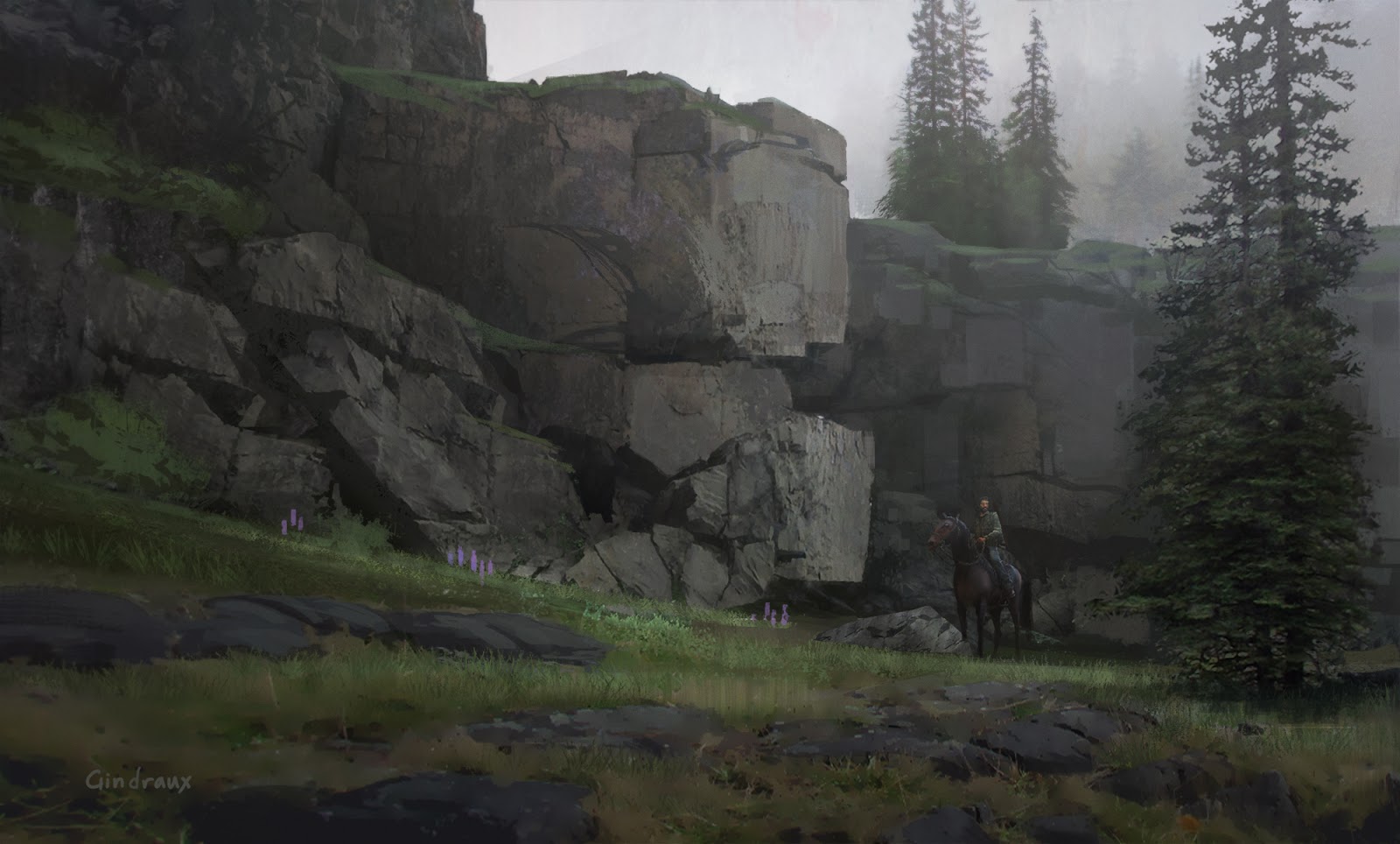
These images are works from the game The Last of Us. As you can tell I am quite a big fan of this game. I feel it symbolises everything that I feel makes a great, engaging game. Every detail is perfect in my opinion. For example all of these landscape concepts depict the mood and feel for that  particular environment. The fundamentals are down. Use of perspective to enhance the 3D readability of the image. As well as clever lighting and layout, every single one of these images is immersive. They all stick to a very organic colour pallet with muted colours that tied in with all the other technical choices made for the imagery. Having seen and experienced the final outcome, they really stayed true to the images and style that they created in the early stages of  of design.   


This stretches through to the character development, including the monsters and enemies in the game. They followed the same believable and realistically possible structure that the environments had. Countless variations and different ideas are put into characters. Once a final design is decided, an illustration of the characters needs to be done in order to show their personality. Again they need to be readable just from just one image as well as a series of images.

To place the characters within an environment composition also shows how characters and environments tie together, to show an all-round immersive feel to the imagery. It gives us a chance to understand the human impact within the surroundings that have been created.
I feel that simplicity is key when coming up with the visual compositions. Over complicating an image can cloud the original message within the scene, and how people read it and interpret it. Using the great classical elements that made the great masters artworks, can enhance the impact of games concepts and design on the viewer. It is becoming an art form within itself. The games industry is becoming a lot more art conscious and is hiring and requiring more and more technically exceptional artists to produce their design and concepts work.


I stumbled across this article written by the film critic Roger Elbert, entitled ‘Video Games Can Never Be Art’ http://www.rogerebert.com/rogers-journal/video-games-can-never-be-art This article was written on April 16th, 2010. Robert Elbert passed away on the 4th of April 2013 at the age of 70. He stated that Video games would never be art in the lifetime of anyone who has a current interest in them. But this is coming from a man of 67 who has seen a lot of new technological advances, but believes in the stigma that games cannot be art. I feel that The Last Of Us challenges his words. I feel it matches with other forms of art of storytelling but in such an advanced way. 

If people could see games for what they are now and are fast becoming, without the stigma they’ve seemed to have gained over the years, I’m sure many would question their own opinions. So many art forms are taken into consideration with modern games, from visual style to the music used. I feel they are on a fast track to becoming a controversial art form, that I personally love and these are elements that I always look for within a game.

Elements of game design part 5: Planning and Concepting

The making a game and many things in this word is a series of planned out processes that follow a strict formula. 

This work flow is the basis for design. It’s a series of trial and error. Idea generation, starting with no boundaries to help loosen up the mind to be inventive and creative when coming up with new ideas. Through this process of handing in ideas, and receiving opinion, constraints are born. This helps to really focus the team on what direction all idea’s should be following.

Looking through a recent purchase of mine ‘The Last Of Us’ art book (pictured below) In the introduction it states, they were told to “develop Naughty Dog’s next big franchise.” From this broad scope they had to narrow down every element of the game. The first idea/restriction they came up with, was to base the story around the relationship between 2 characters, this then quickly developed into the idea of a father daughter type relationship.


This was a solid ground to work on, as obviously, the game ended up exactly as such. A good base idea can carry out all planning and development for the entire concepting process. In constrains we begin to find what exactly is needed to make this game a success. Multiples of people are always involved. With most of the time the creators and idea generators have to answer to those who are funding the project and producers. These back and fourths between people again, are key to moulding an idea to eventually reach its final desired outcome. 

For me personally I find once I have an idea planted in my head, I try my best to stick to that idea. To the point where I will discard any other good idea just because my first idea was such a great idea that helped spur the rest of my designs.

For instants. A current project I’m working on, is to design a land sea and air vehicle that can carry 2 people and a lot of equipment. As soon as I heard the project brief, I instantly thought of a vehicle I saw on the TV show Top Gear. 


This car had tyres with built in paddles that scoop the water and placed in such a way on the tires, that when it hits the water it skims across it. I had this idea of the tyres stuck in my head right from the word go. However when designing, you have to generate a load of concepts to explore as many idea’s as possible. In this process, I tried out some ideas that use the same systems as a hovercraft.


This was my main idea, (pictured above) where by the cylinders at the side would act as the paddled tyres as well as the protective case for the propeller’s. I had my heart set on this idea, but this idea (pictures below) has also wormed its way into my favourites.  


It’s a concise and simple idea, which is why I think its works so well. I have yet to develop the original idea. So I have yet to see its full potential.

The process of concepting is purely about idea generation and not getting too attached to an idea. You need to be able to churn idea after idea out into the firing line. A lot of idea will be rejected even ones that you particularly love. The game design process is a team effort, and there will always be others that will object to your ideas, but also be willing to collaborate on them further. 

Reflection on year 1, and ambition for year 2

So I’m back fresh and slightly terrified after a long yet very quick summer break. On receiving my results I suddenly realised just how much this course asks of me. I felt I worked myself the hardest throughout my entire educational journey for this course and yet I scraped by with a minuscule pass mark…oh dear.

This truly scared into thinking I seriously need to up my game. Even though I felt it was the hardest I’ve ever worked (and it was) I can still see where I needed to pick up the slack. Better planning and consistency are key I think. I made a habit of not starting things right away, as well as spending more time and effort on some projects rather than others. Balancing time is so crucial on this course and I need to be incredibly strict just too even begin to pull it off.

I’m not really majorly happy with any of the work I did in the first year, which is something that needs to change for the second year. This is when we start to think about portfolio and employment, which in itself, seems incredibly daunting. I feel I will never be prepared enough for work in this industry. I guess that’s what the second year is for. I just hope it works out that way.

So it’s all up to me. Only I can make whatever I want from this course. Starting with better organisation. I find that I spend more time on 3D work, simply because it is my weakest suit. I panic and stress to the point where I’ve completed a task that still looks shockingly bad, but also has left me no time for any other work. Clever I know. So, I guess I need to spread my time and effort more effectively. Possibly find time to practice my own skills, the things I enjoy the most, like tradition 2d as well as digital painting.

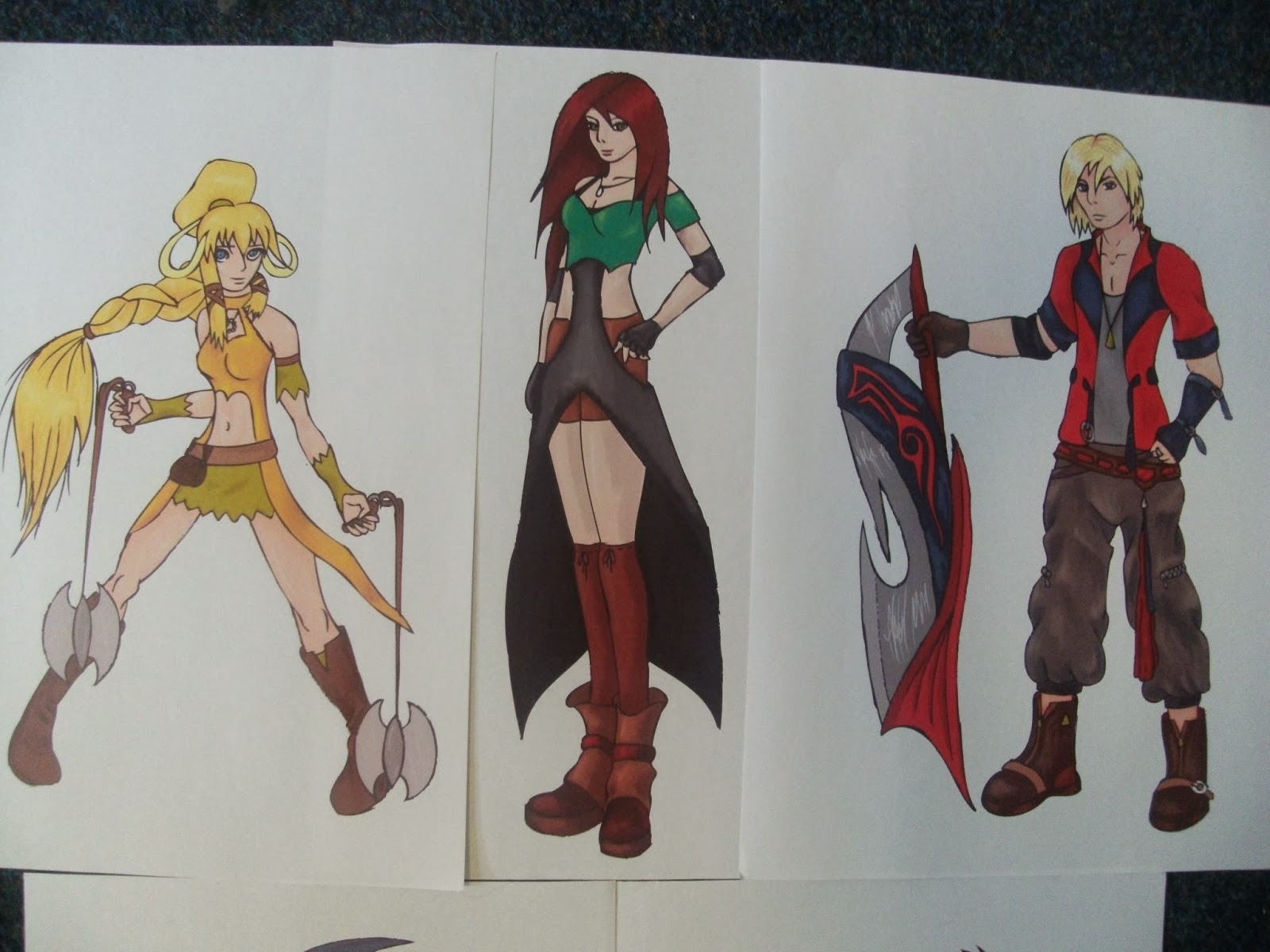
I need to re-realise why I chose this course in the first place. I got caught up in the work load and completely forgot why I signed up in the first place. I aim to be a concept artist, to be even more specific, a character concept artist. That was my main inspiration all along. Those characters I drew throughout my school years because school was just so painfully dull and I wish I focused on that more. I hope that with focus on employment this year, as well as an opportunity to do some awesome work for portfolio. I think a big thing to keep in mind is stress. I refuse to stress this year, as I have a personal situation that comes with all the downs I can handle.

My boyfriend is a soldier and is on tour to Afghanistan. I had to deal with this last year too but only for the first month or so. This time round, he’ll be away for my whole second year. This sucks because he always puts so much faith in me and tells me that I can do anything I set my mind to. If anything, I want to do well in this course for him, to prove that he was right all along.